History & Legends
Vlad the Impaler
In June 1462, Mehmed II marched on the Wallachian city of Târgoviște with a huge army. Mehmed was the Ottoman sultan who had conquered Constantinople nine years earlier, and he had come to crush Wallachia’s prince. Outside the city he found thousands of prisoners dead on wooden stakes. The Greek historian Laonikos Chalkokondyles put the number at about 20,000.
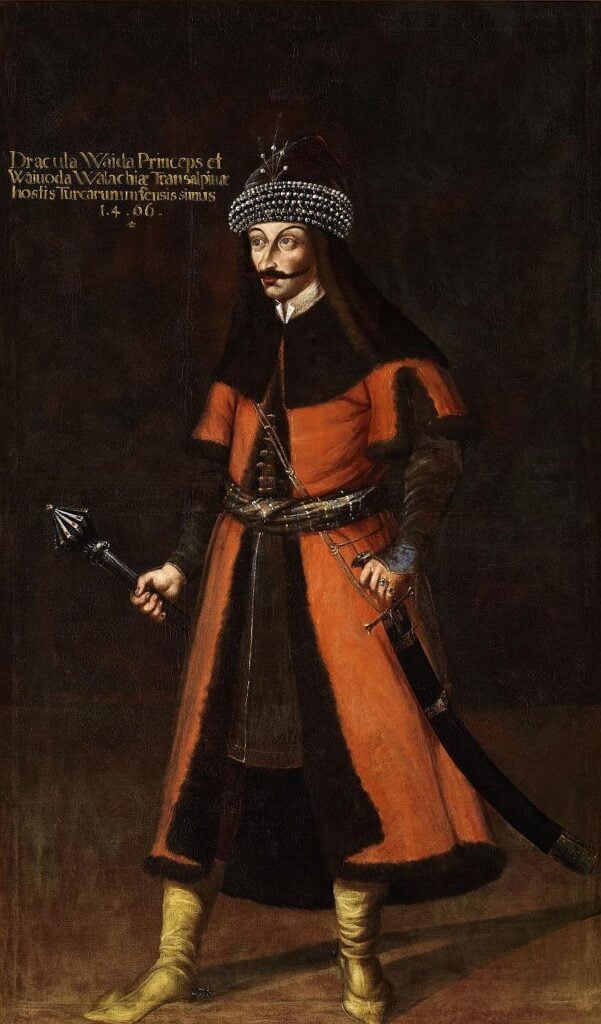
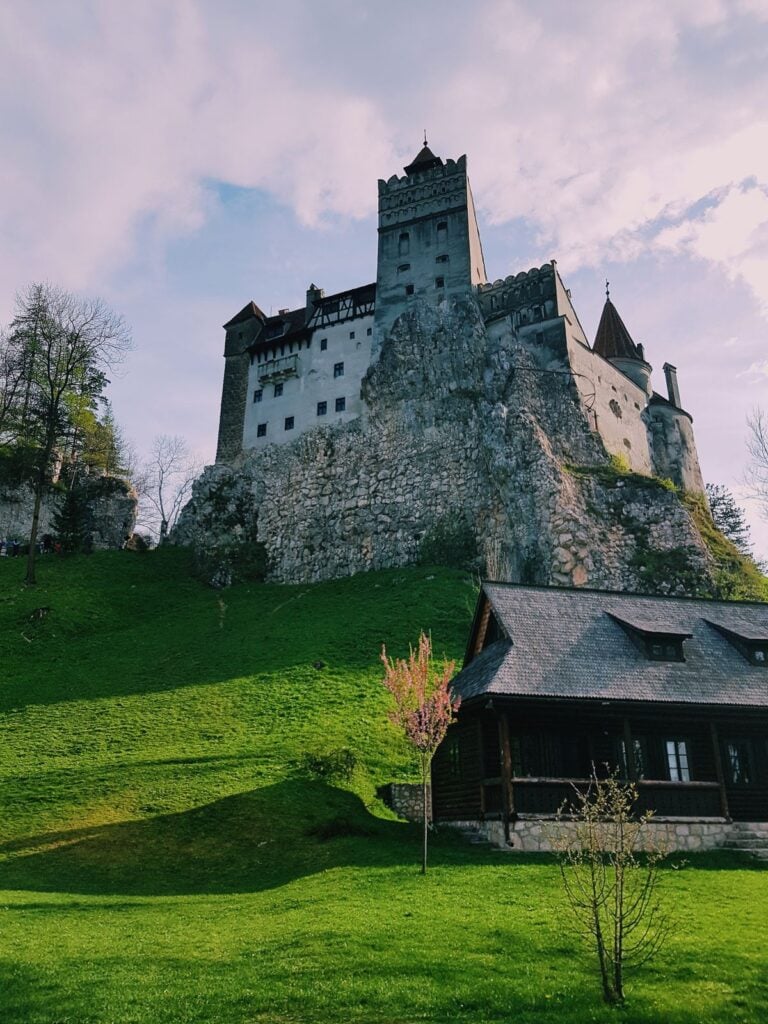
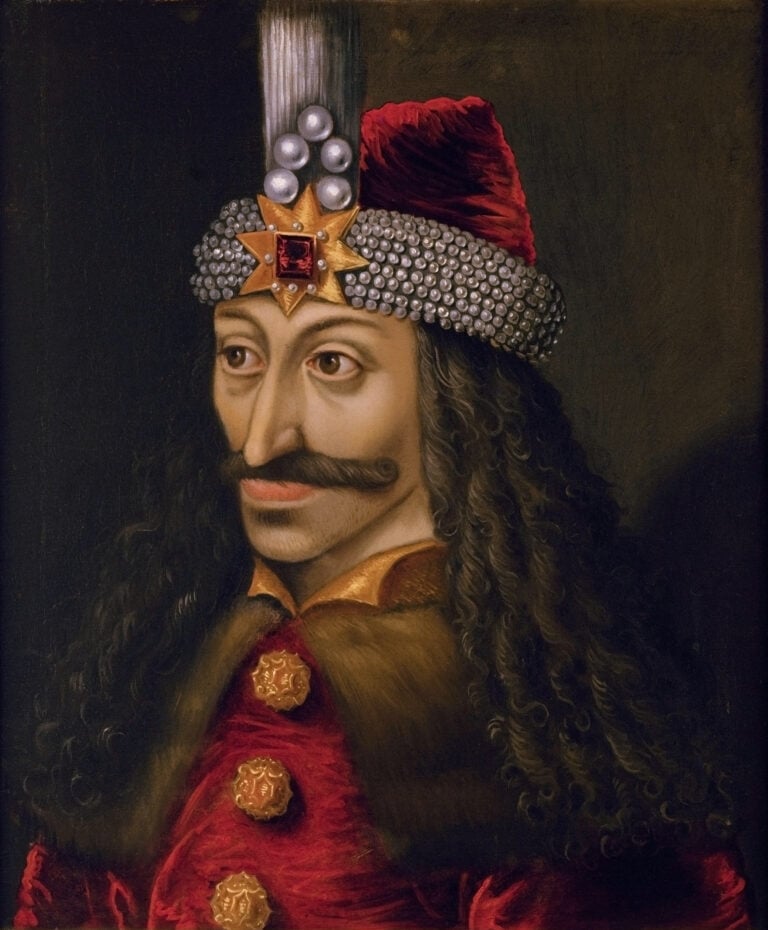
The prince who put them there was Vlad III, better known as Vlad the Impaler. He ruled Wallachia, a small principality covering much of what is now southern Romania, for fewer than seven years in all. Bran Castle stood on Wallachia’s northern border, and Vlad knew the road below it well.
The dragon’s son becomes a hostage
Vlad was born between 1428 and 1431, most likely in Sighișoara, a walled town a couple of hours’ drive north of Bran. Around 1431 his father, also named Vlad, joined the Order of the Dragon. Sigismund of Luxembourg, king of Hungary, had founded the order as a brotherhood of nobles sworn to fight the Ottoman Turks.
That membership gave the family a famous nickname. The story of how it reached Bram Stoker gets its own article, “The Prince Behind the Name.”
Wallachia sat squeezed between Hungary to the north and the Ottoman Empire to the south, and its princes had to keep both happy. In 1442 the elder Vlad got out of trouble with the sultan by leaving two sons behind as hostages. Young Vlad and his little brother Radu spent the next few years locked in the Ottoman fortress of Eğrigöz, in what is now Turkey.
Radu grew comfortable among his captors. Years later he would take Wallachia’s throne from his own brother with Ottoman help.
Taking the throne in a dangerous neighborhood
Disaster struck at home in 1447. John Hunyadi, the regent who governed Hungary for its boy king, invaded Wallachia. Vlad’s father and older brother Mircea were murdered, and some of Wallachia’s own nobles, known as boyars, had a hand in it.
With Ottoman backing, Vlad grabbed the throne in the autumn of 1448. He lasted about two months before a rival chased him out. He spent the next eight years drifting between foreign courts, hunting for allies.
In 1456 he took the throne again, and this time he held on until 1462. He ruled from Târgoviște, south of the mountains. Boyars switched sides whenever it paid, and few Wallachian princes died in bed.
Ruling by fear
Vlad answered all that danger with terror. He wiped out boyars he did not trust, including men blamed for his father’s death. Thieves and cheats got the same treatment.
His favorite punishment gave him his nickname. Executioners drove a sharpened stake through the victim’s body and set it upright, and death could take hours. Impalement was centuries old by Vlad’s time, and he made it his trademark by using it so often and so publicly.
Stories about him grew in the telling. One says he left a golden cup beside a fountain for travelers, and nobody dared to steal it. A Romanian legend says he invited a crowd of boyars to an Easter feast and had the older ones executed. The younger ones were marched off to rebuild Poenari Castle, high above the Argeș River, where they worked until their clothes fell apart.
Some of his victims lived just down the road from here. Vlad feuded with the Saxon merchants of Brașov, German-speaking traders who sheltered his rivals and fought him over trade. His troops raided the villages around Brașov more than once, and the Saxons’ stories later turned up in print all over Germany.
Showdown with the sultan
Vlad’s biggest fight was with the Ottomans. He stopped paying the sultan’s yearly tribute, and in the winter of 1461 he crossed the Danube and raided Ottoman towns along the river.
On 11 February 1462 he wrote to Matthias Corvinus, the young king of Hungary and son of John Hunyadi. His men, he reported, had killed more than 23,884 Turks and Bulgarians, and he listed the dead village by village.
Mehmed came north that summer to settle things. Vlad fell back, burning crops and poisoning wells as he went. On the night of 16 June he led a surprise raid on the Ottoman camp, hoping to kill the sultan in his tent. He missed.
Mehmed reached Târgoviște and its field of stakes soon after. He turned for home and left Radu behind with Ottoman troops to take Wallachia’s throne.
Twelve years in prison and one last comeback
Vlad’s support melted away. He crossed the mountains into Transylvania to ask Matthias for help, and late in 1462 the king had him arrested. Matthias’s men produced letters in which Vlad supposedly offered to serve the sultan. Most historians think someone forged them.
Vlad spent roughly the next twelve years in Hungarian custody, much of it at Visegrád, a royal castle on the Danube. A Russian account written in the 1480s claims he passed the time catching mice and birds and impaling them on tiny sticks.
Matthias let him go around 1475. In November 1476, with Hungarian and Moldavian help, Vlad won back his throne for a third time. Within weeks he was dead, killed in battle near Snagov, north of Bucharest, in late December 1476 or early January 1477.
Antonio Bonfini, an Italian historian at the Hungarian court, wrote that Vlad’s head ended up on a stake in Constantinople. Nobody knows where the rest of him lies. Tradition points to Snagov Monastery, on an island in a lake, but archaeologists who dug there in 1933 found no tomb. Some historians favor Comana Monastery, which Vlad founded.
How his reputation took shape
Vlad’s bad press started while he was still alive. The printing press was brand new in Germany, and pamphlets about the cruel prince of Wallachia became some of Europe’s first bestsellers. A woodcut printed in Nuremberg in 1499 shows him eating dinner in a forest of impaled bodies.
The Russian account painted a more mixed picture. Its author, thought to be the diplomat Fyodor Kuritsyn, gathered stories about Vlad in the 1480s. His Vlad is cruel, and he also keeps such strict order that honest people have nothing to fear. That account is the source of the golden cup story.
The Ottomans called him Kazıklı Voyvoda, the “Impaler Lord.” The Romanian nickname Țepeș, which also means “the Impaler,” shows up in the records only after his death.
In Romania, many people remember Vlad as a tough patriot who stood up to a superpower and stamped out crime. In 1881 Mihai Eminescu, Romania’s national poet, wrote “The Third Letter,” a poem that begs Vlad to rise from the grave and deal with the country’s crooked politicians. A bust of Vlad stands in Sighișoara today, a few steps from the house where tradition says he was born.